Eligibility computed, not compiled
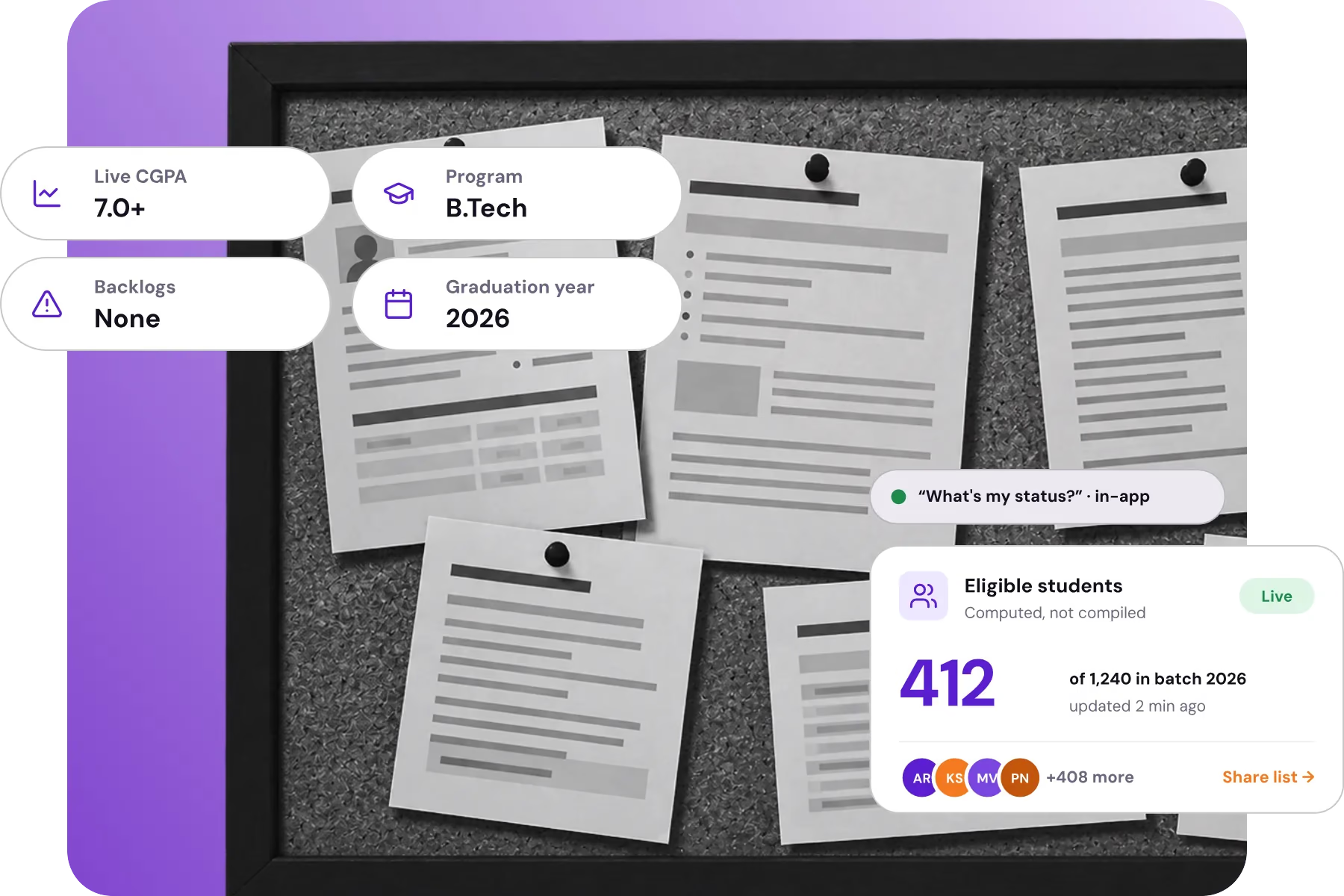
Filters run against real academic data — live CGPA, program, backlogs, graduation year — rather than a manually maintained sheet that was accurate on the day it was made.
Compliance & Operations · Placements
Most placement cells spend the year compiling — CGPA sheets, eligibility lists, recruiter formats, and answering “what is my status” one student at a time. When the placement office reads the same records as the academic office, all of that becomes computed rather than compiled.

The problem
Chase the departments for marks. Build the eligibility sheet. Discover it is stale. Re-key student details into the recruiter’s format. Field a hundred status questions. Assemble the placement report at year’s end from records nobody kept consistently.
None of it is career work, and all of it exists because the student data is stored somewhere the placement office cannot access directly.
Features
Filters run against real academic data — live CGPA, program, backlogs, graduation year — rather than a manually maintained sheet that was accurate on the day it was made.
Job postings, companies, employer partnerships, drives, rounds, applications and offers, with internships and training programs managed alongside placements rather than separately.
An employer portal so companies serve themselves. A student portal so students see their own status without asking.
External recruiting platforms access your talent pool through a documented API, with each institution assigned its own key. Keys carry explicit scopes, are rate-limited and instantly revocable. The full key is displayed only once, keeping access controlled, auditable, and institution-specific.
You are handing a third party access to your students’ records, and you should be able to describe the limits of that access in one sentence. Single sign-on into AlphaRecrewt using signed tokens with automatic key rotation. No second login, no second password to reset.
By company, salary band and department.
AI
Candidate matching against real openings.
Resume building and interview preparation tailored to the target role.
A complete readiness view across academics, skills, and certifications — showing students exactly where they stand and what they need to work on next.
From academic performance to certifications, see what stands between a student and their next opportunity.

On one data layer, the placement number sits on the same board view as enrolment, attainment and compliance, and it is the same number the placement office is working from.
Scoped, revocable API access and live eligibility, so the conversation with an employer starts at the shortlist.